
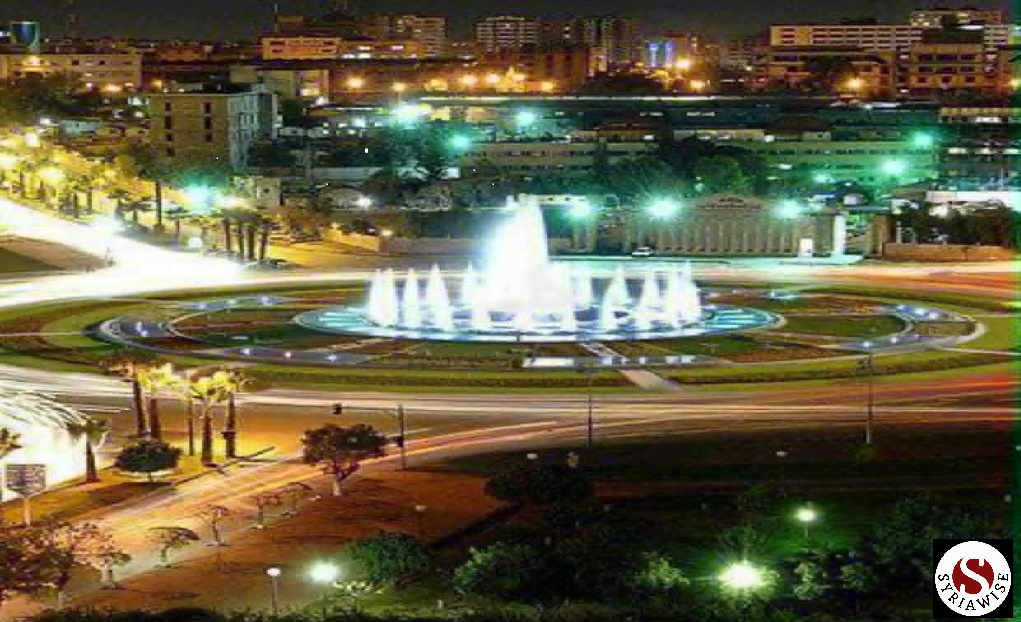
 Umayyad Square, Damascus. Photo credit/ Omar Almuqdad
Upon my arrival in Damascus, I was interviewed by a media outlet. The interviewer’s question surprised me: Is Damascus still secular? In truth, as much as the question surprised me, it was expected. Yes, Damascus is still secular, and even bears the hallmarks of any traditional European city. My arrival in Damascus coincided with the Christmas celebrations which were incredibly grand and enjoyable.
Bars serving alcohol are widespread in the streets of Old Damascus. Women move about with complete freedom in the streets. I had the opportunity to attend a stand-up comedy show and the scene was truly surreal. I couldn’t believe that a day would come when, in a country once ruled by an extreme dictatorship that monitored people’s every breath, and arrested them for speaking out, I would hear a comedian openly mocking the president in a bar. It was quite shocking.
“Old Damascus now hosts bars, comedy, and open political mockery.”
Omar Almuqdad
But is this really all that Damascus needs?
Or, to rephrase the question: Is this Syria’s only problem today? The answer is very complex and requires a great deal of courage and candor to address. Syria today is a country emerging from a 14-year war that destroyed almost everything and it faces a dire economic reality: the former dictator emptied the central bank of all its funds before fleeing the country to Russia.
Electricity is only available for a few hours a day, although the current government has worked hard to improve the situation. There is still a long way to go to fully reform this sector, especially given the political and sectarian polarization gripping the country. Some minorities feel like they have lost power and are constantly striving to create a new reality: one that perpetuates the chaos, the results of which will be unsatisfactory for everyone.
A Western journalist jokingly remarked to me, while sipping Syrian wine, about the biased coverage of Syria in some Western media outlets: “We’re now drinking wine under the protection of al-Qaeda.” Certainly, the concept of freedom is much deeper and broader than that; it encompasses several levels.
Syria’s priorities today are economic recovery and reintroducing itself to the world. Syria possesses all the necessary elements for success, history, geography, and resources, most importantly its qualified human capital, which puts it in genuine competition with stable and prosperous nations. However, prices, which still rival those in major world cities like Montreal and Tokyo, are completely disproportionate to the average individual income.
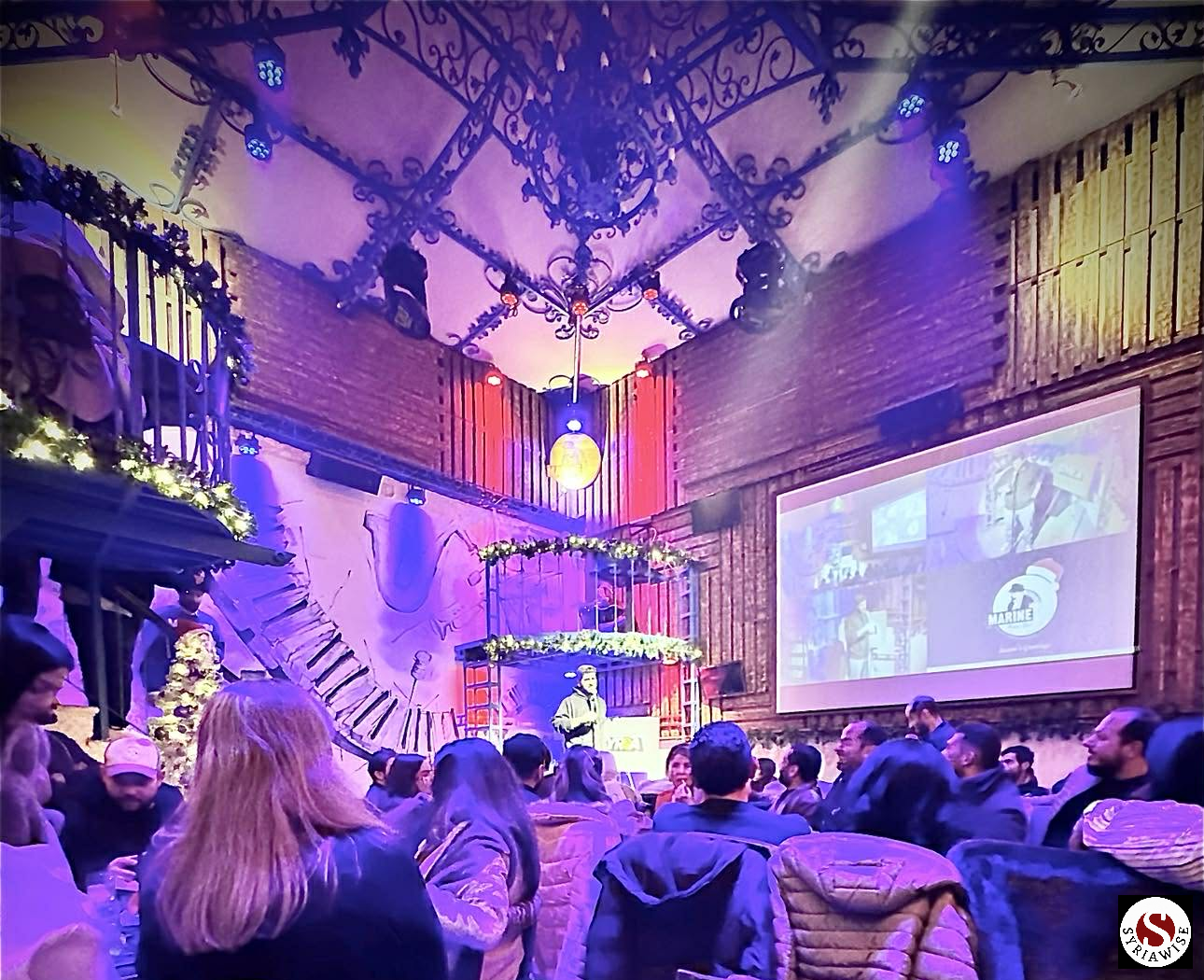 Comedians now feal free to joke about the President in Damascus. Photo credit/ Omar Almuqdad
But, the reality of destroyed cities and neighborhoods remains a testament to the barbarity of a regime that spared neither man nor stone from its brutality. Just a drive of less than ten minutes outside Damascus is enough to put you in front of a scene that evokes feelings of extreme sadness and regret. Entire neighborhoods that were once vibrant with life have been reduced to lifeless rubble.
“Ten minutes outside Damascus, entire neighborhoods lie in ruins.”
Omar Almuqdad
I heard from a government official that the state is working towards resolving this issue fairly. After spending nearly two months traveling between Damascus and southern Syria, I can say that there is still much to be done. But is there any freedom for society to operate freely? It is clear that the current government understands that Syria cannot go back to the way it was, and if it wants to survive it must avoid the patterns and methods of the old regime. Despite all the accusations leveled against the government, and especially the president, there are no indications on the street of a repressive or religiously extremist tendency within the new government.
This tendency seems absent at present, and there are no signs to suggest otherwise. It appears that the current government’s priorities are not linked to establishing a repressive, parasitic regime, as its opponents portray it. This is readily apparent simply by walking through the streets of Damascus. To the contrary, its priorities are purely economic and focused on public services. To its credit, this government has realized that its salvation lies in opening up to its own people first, and then to the world.
