
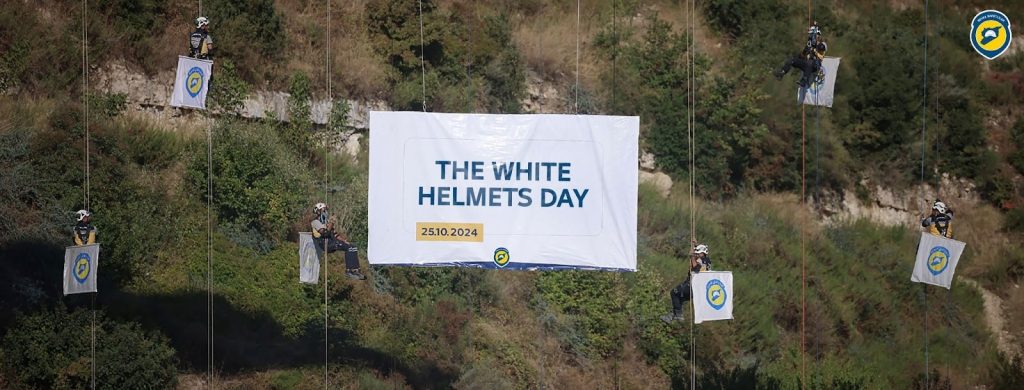
Despite all the death and destruction that has been wrought upon Syria by the Assad regime and its allies over the past 13 years, one group has risen from the ashes like a phoenix and transformed into an internationally recognized beacon of hope and light. However, transitioning from a group of volunteers working under exceptional conditions to a fully integrated and comprehensive institution required significant effort. This evolution was not just a response to an urgent humanitarian need, but the result of a deep commitment to serving Syrians.
Ten years have passed since the signing of the charter that established the Syrian Civil Defense (White Helmets), the Syrian institution that took on the responsibility of rescuing Syrians from the attacks by Russia and the Assad regime. Over the past years, this responsibility has expanded to include various sectors and fields aimed at improving the lives of Syrians and alleviating their suffering after more than 13 years of war waged by Russia and the regime against them.
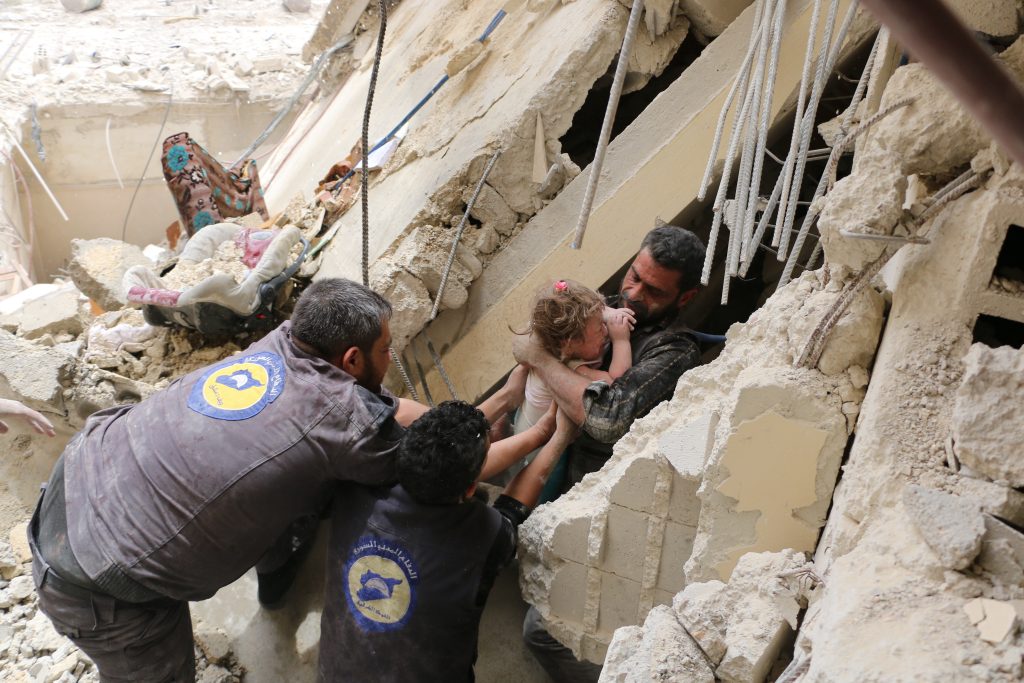
On October 25th, the Syrian Civil Defense commemorates “Syrian Civil Defense Day,” which marks the anniversary of the first foundational meeting held in Adana, Turkey, on October 25, 2014. The meeting was attended by around 70 leaders of volunteer teams in Syria, who had been operating since the end of 2012. The attendees set out a charter of principles for the organization to work under the umbrella of international humanitarian law, and they agreed to establish a national umbrella to serve Syrians, naming it the “Syrian Civil Defense.” The organization’s motto was drawn from a verse in the Qur’an: “And whoever saves a life, it is as if they saved all of humanity.”
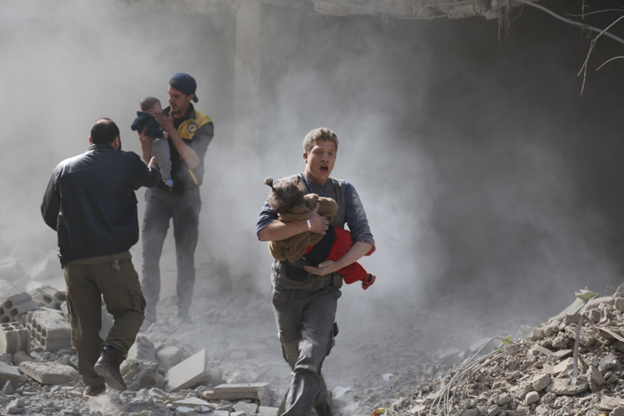
The past ten years have been long, heavy, and filled with pain and hope. The Syrian Civil Defense (White Helmets) has stood by the Syrian people, and the people have stood by them, exchanging love and placing their trust in the organization—whether they were inside Syria or in refugee countries, along with all those who believed in the White Helmets’ mission around the world.
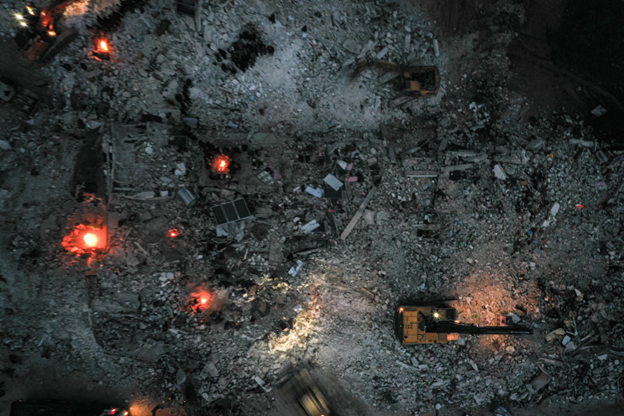
Since becoming an official organization, the White Helmets have saved many lives, lost many members, responded to earthquakes and other disasters, and implemented specialized projects in various fields. However, the most important achievement has been its growth as an institution, transforming into a comprehensive service entity. Its work now goes beyond emergency responses to bombings and air raids. It provides numerous services aimed at mitigating the effects of war and disasters on Syrians, establishing itself as a national umbrella for Syria, working for the Syrians, and not for itself. This breaks the old rule under Assad’s regime where “society serves institutions,” replacing it with “the institution serves society.”
Over the years the administrative structure of the White Helmets has changed, administrative programs have diversified, and institutional and operational capacities have evolved—all to meet the needs of Syrians and offer better services, with saving lives remaining at the core of the organization’s work.
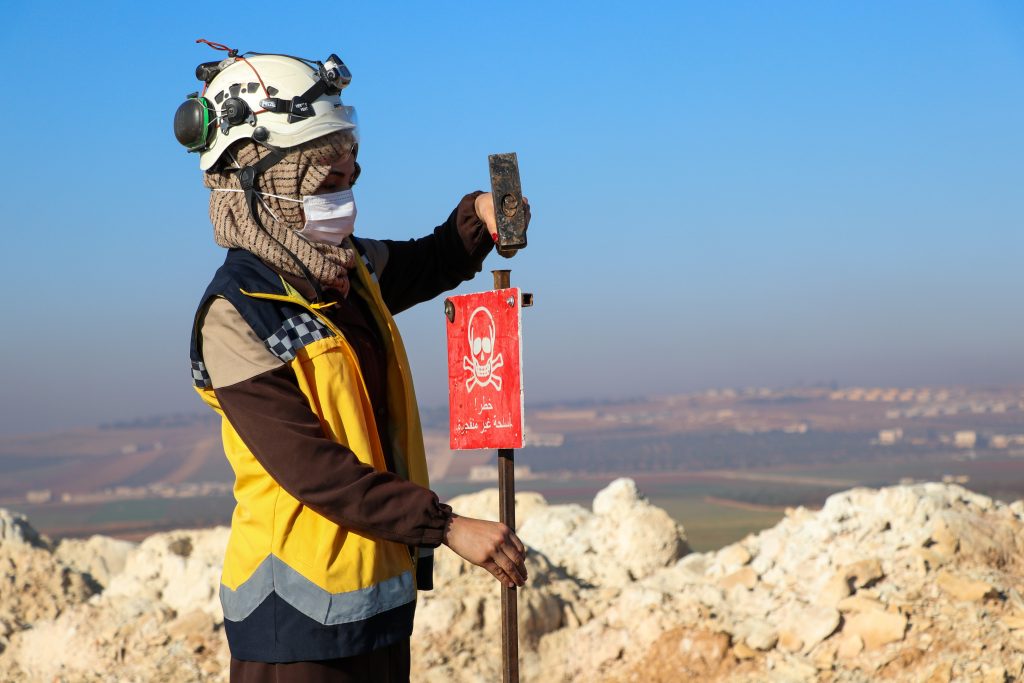
Women also work as volunteers for the White Helmets. Nermin al Hasan told SYRIAWISE, “Through rescue and first aid operations, I transitioned from being a paramedic tending to wounds of the injured, to a volunteer in the war remnants survey and clearance teams, with the same goal of protecting civilians. However, there were differences in the risks, the type of work, and how society viewed me as a woman working in this field. I faced many challenges as a mother, volunteer, and someone living under bombardment and displacement, but I overcame them with determination, love for my work, and the support of the people around me. I am proud that we have destroyed more than 25,000 unexploded ordnances, and we continue our work alongside our civilians and children, protecting them from the long-term danger caused by years of war waged by the regime and Russia, until we achieve a safe and healthy environment free from all dangers.”
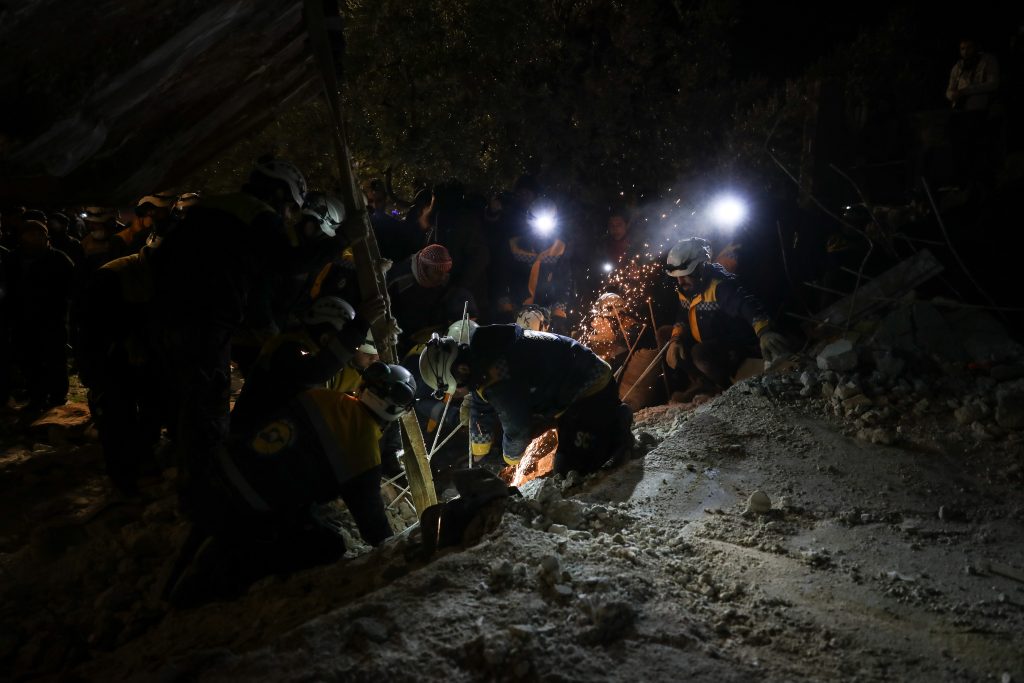
For more than 13 years the war waged by the regime and Russia has wreaked havoc across Syria and the February 6, 2023 earthquake compounded this destruction. To address this, the Syrian Civil Defense initiated a series of infrastructure projects, not just to rebuild essential facilities and roads, but also to stabilize the population. This shift from emergency response to long-term planning marks a new phase in the institution’s operations. The recent completion of the Khalid Ibn al Walid school in Jindires, north of Aleppo, is a testament to this, providing a safe and sustainable educational environment for 4,000 students after the school was destroyed by the earthquake. This represents a crucial step in rebuilding communities and investing in the future.
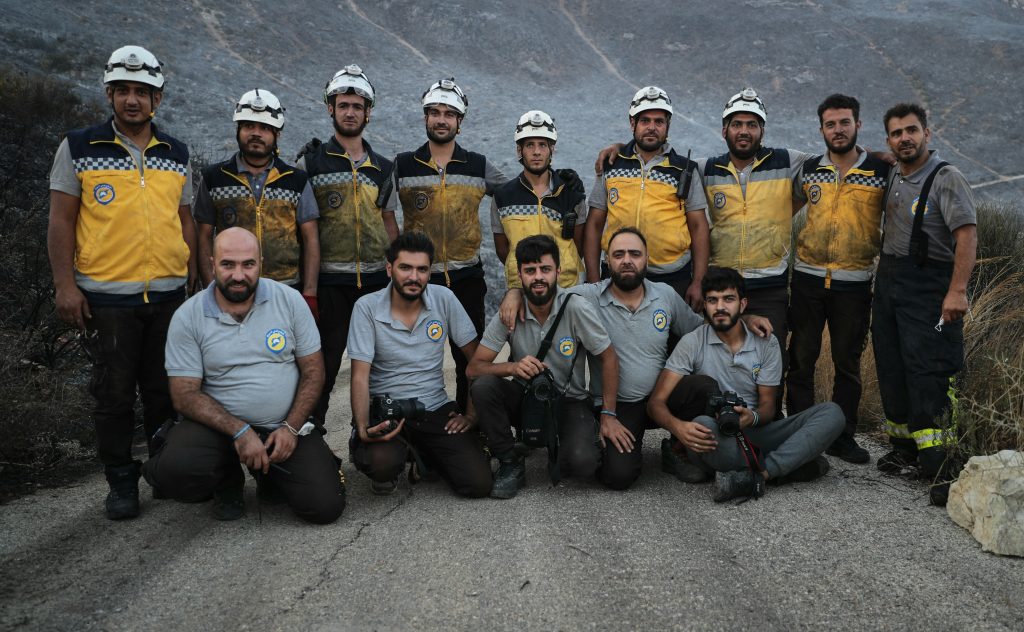
Yousef Azzo also told SYRIAWISE about his evolution as a volunteer. “Ten years were enough to completely change our lives as Syrians. I am proud that I chose the path of the Syrian Civil Defense. Over time, we experienced moments that were both joyful and sorrowful amid the war and displacement. Despite the challenges, I was able to remain patient and became a trainer in search and rescue and firefighting. I passed on my experience to my colleagues and a large segment of civilians and the community that supports us during crises and disasters. All of you witnessed, after the earthquake disaster, how we stood united in the face of the catastrophe, rescuing lives from under vast areas of rubble in northwestern Syria. I will never forget the many children we saved after the earthquake. We continue today, ten years after the establishment of the White Helmets, in our journey to save lives and build a future through our projects that support civilians and restore destroyed infrastructure, with our mission to achieve justice for Syrians and their dreams of freedom and peace.”
Over the past years, the White Helmets lost 312 volunteers, most of whom were killed in double airstrikes or direct attacks by the regime and Russia while rescuing civilians. Their facilities have also been targeted multiple times
The White Helmets have completed dozens of infrastructure projects aimed at rehabilitating and supporting public services in northwestern Syria, improving health services, and providing safe water and sanitation systems.
But not everyone has viewed them as heroes. Working to support communities under attack has made the Syrian Civil Defense a high-profile target for regime and Russian forces. Over the past years, the White Helmets lost 312 volunteers, most of whom were killed in double airstrikes or direct attacks by the regime and Russia while rescuing civilians. Their facilities have also been targeted multiple times.
The White Helmets have also faced an ongoing media disinformation campaign backed by Russia, attempting to discredit the organization and portray its volunteers as “terrorists.” These campaigns aim to undermine the credibility of the evidence collected by the White Helmets on war crimes, such as chemical attacks on civilians.
Despite the challenges of the past decade, the White Helmets continue to operate with the unwavering hope of rebuilding Syria and achieving justice for its people.
“We still have much to do, whether on the operational level, in rebuilding infrastructure, or in the pursuit of accountability and justice for Syrians”
Raed Al Saleh, Director of the White Helmets
On the eve of this year’s Syrian Civil Defense Day, the White Helmets director Raed al Saleh told SYRIAWISE:
“The ten years that have passed in the life of the Syrian Civil Defense (White Helmets) and in our lives as volunteers have been anything but ordinary. We faced many challenges and abnormal circumstances due to our work in communities subjected to a destructive war by the Syrian regime, Russia, their allies, and Iranian militias, in addition to natural disasters, particularly the devastating February 2023 earthquake. We managed to develop our capacities, respond to thousands of attacks, help communities, support their resilience, and expand the institution’s programs to meet the nature of the conditions and the needs of the people. I see this anniversary as an opportunity to conduct a comprehensive evaluation of our work to provide the best possible service to our people. Today, the challenges have changed, and the war is not over. We still have much to do, whether on the operational level, in rebuilding infrastructure, or in the pursuit of accountability and justice for Syrians. We view this as a priority because achieving justice for the victims and holding the Syrian regime and all those who committed crimes against Syrians accountable means achieving peace and stability, a crucial step in building the future of Syria and its people.”
Dedicated to the memory of James Le Musurier who cofounded the White Helmets with Raed Al Saleh in 2014.
All photos courtesy of the White Helmets.
